The Development CAFE recently participated in the SmartFutures event, a comprehensive two-day exploration of blockchain technology and sustainable development. Our participation reflects DevCAFE’s ongoing commitment as a tech4good think tank to engage with emerging technologies, including Blockchain, Artificial Intelligence (AI), Internet of Things (IoT), and drones for social impact. Over the years, we have explored practical applications of these technologies through both implementation and advocacy. For example, our initiative Project I AM leverages blockchain to support digital identity solutions for refugees and stateless populations. We also contribute to thought leadership through a series of public lectures and webinars, including sessions on Blockchain technology for M&E and Using Blockchain Technology in Development Programming, which are available via our YouTube channel.
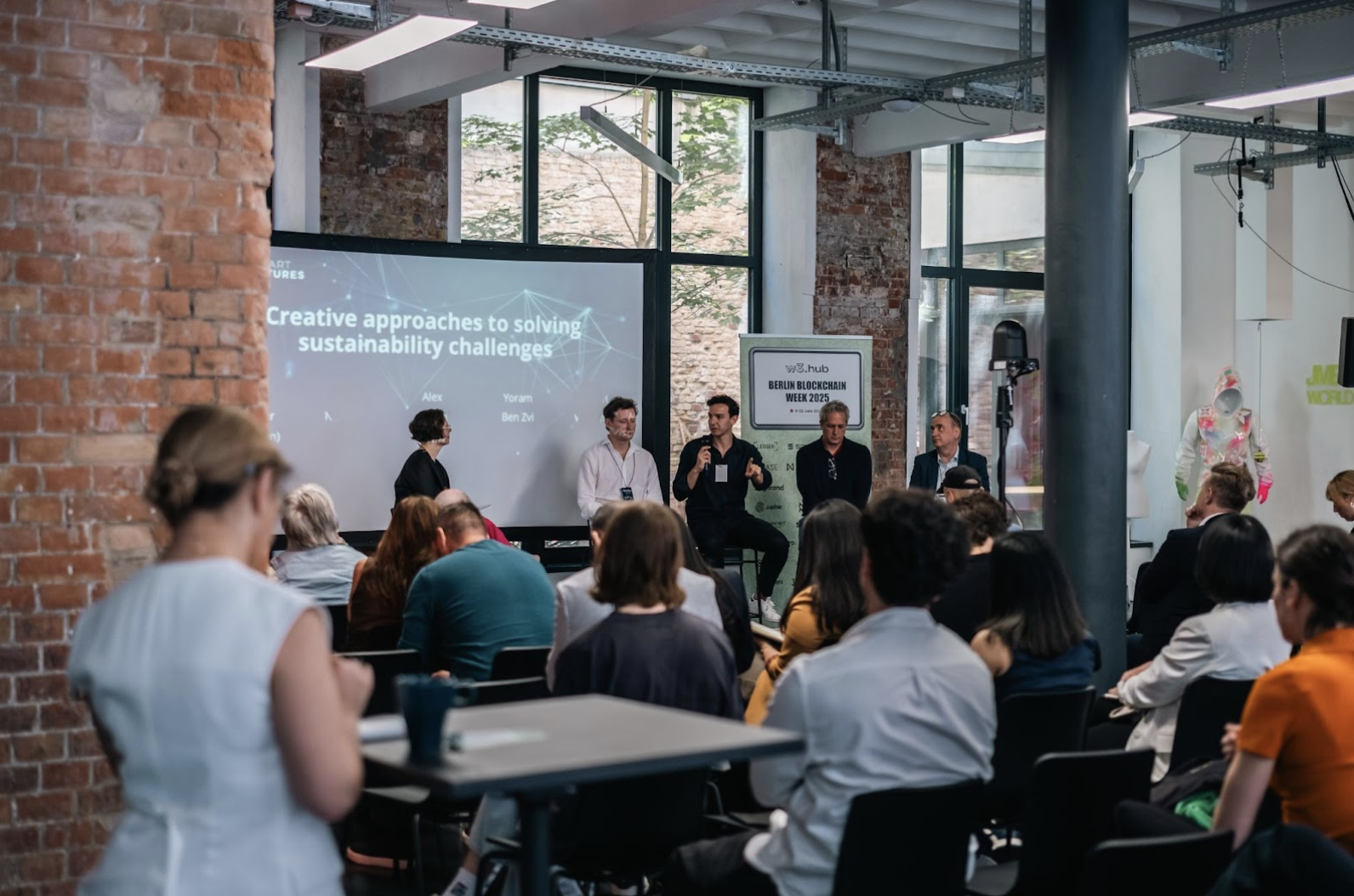
Photo Credit: SmartFutures team, UNDP
In this context, attending the SmartFutures event, hosted by the United Nations Development Programme (UNDP) in partnership with the Cardano Foundation and other key organizations was a natural extension of our mission. Held at the iconic w3.hub in Berlin during Berlin Blockchain Week, the event provided a space for critical dialogue, innovation exchange, and cross-sector collaboration aimed at aligning frontier technologies with sustainable and inclusive development goals.
The event provided a dynamic introduction to blockchain’s transformative potential, with the first day focusing on enhancing transparency, driving urban sustainability, and developing innovative solutions across various sectors through discussions with industry leaders from UNDP and the Cardano Foundation. The second day delved deeper into specific applications including greener industries, connected logistics, and Web3 technologies’ capacity to incentivize sustainable behavior, featuring real-world case studies such as the Smart Port of Tallinn and blockchain-enabled supply chains. Throughout both days, the emphasis on cross-sector collaboration, community-centered design, and practical applications demonstrated how blockchain can serve as a catalyst for positive change, offering tangible solutions through tokenized reward models, programmable money, and digital credentials that could revolutionize both environmental practices and professional development.
Core Insights by Focus Area
- Treasury and Sustainable Funding
The session “Cardano for Good: Bridging Public Sector & Blockchain to meet the SDGs”emphasized the importance of designing blockchain solutions with local communities at the core, rather than treating them as secondary beneficiaries. The discussion outlined how Cardano is actively engaging in real-world impact projects, such as supporting UN resource mobilization through crypto-based models like impact staking Exchange-Traded Products (ETPs). These initiatives use blockchain’s native incentives to fund social causes sustainably and integrate them into regulated financial systems. A key case is Cardano’s work with the UNDP Tadamon Pilot, showing how blockchain can be tested in actual UN programming. The focus is on making blockchain adoption meaningful—used for tangible social impact rather than speculation.
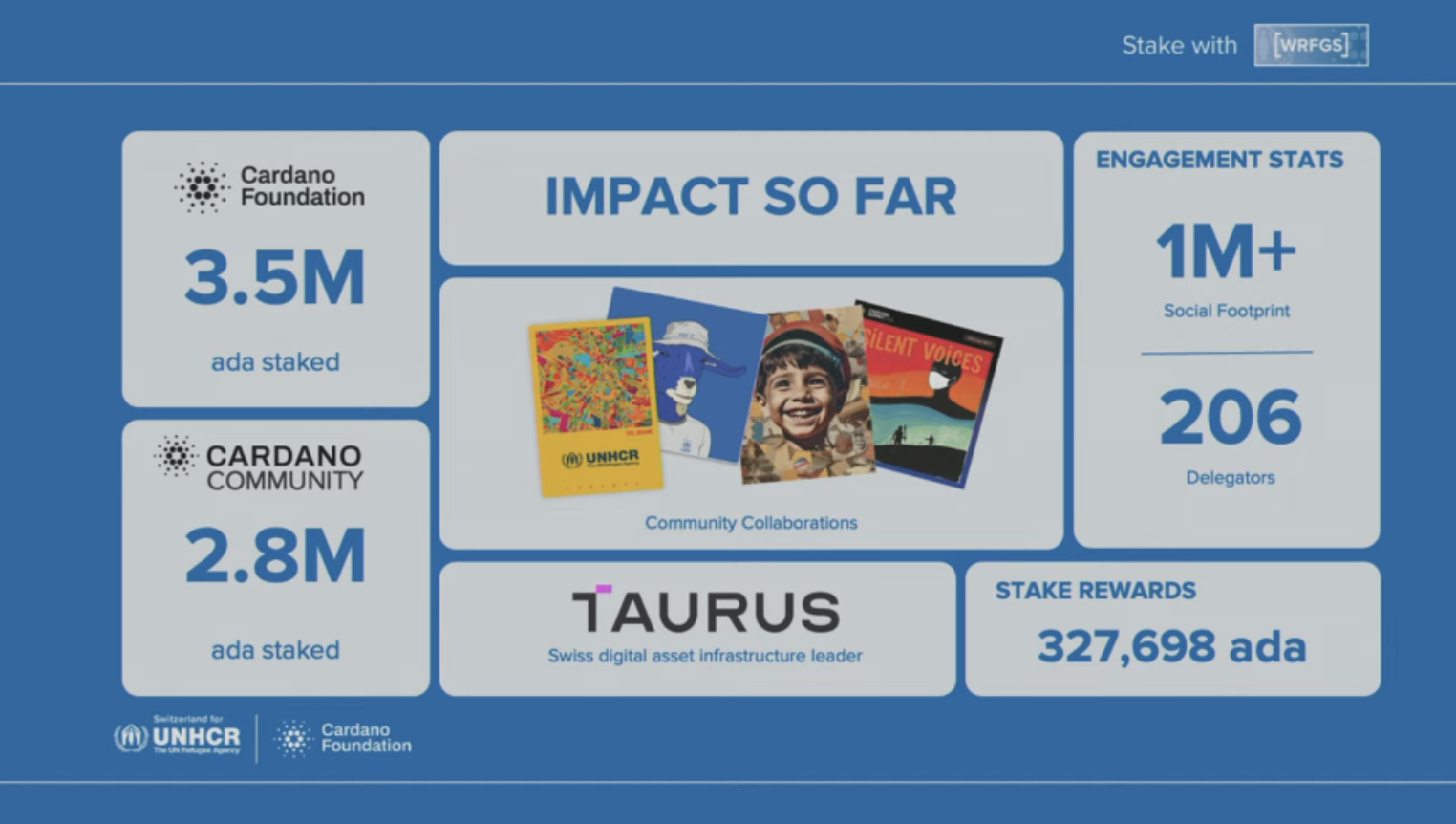 The session also explored how Cardano distinguishes itself through its full on-chain governance, shared only with Polkadot—which allows protocol decisions to be made collectively by its community, unlike centralized systems like Microsoft or Apple. Cardano’s $1.2 billion on-chain treasury is community-controlled, sustained by a 20% tax on network activity, and reinvested through platforms like Project Catalyst. The “coordination layer” concept helps align decentralized stakeholders to tackle challenges such as sustainability. Through such coordination, Cardano is pioneering how decentralized systems can engage with global goals like the SDGs while remaining open and transparent.
UNDP is actively exploring innovative financing models, including crowdfunding and crowd investing, to support sustainable development initiatives. This approach aligns with the broader goal of creating positive impact across multiple sectors. By leveraging blockchain, UNDP aims to enhance the efficiency and sustainability of funding models, ensuring that resources are used responsibly and transparently.
- UNDP, Blockchain, and the Future of Sustainable Urban Development
The UNDP is actively collaborating with blockchain ecosystems like Cardano to explore how digital technologies can address real-world development challenges, particularly in urban settings. Through innovation teams and pilot programs, UNDP is testing solutions such as blockchain-based digital identity systems for civil society and SDG accelerators. These partnerships are part of a broader strategy to build internal capacity and align technological innovation with social impact. In the urban planning context, blockchain offers potential applications in areas like financial inclusion, transparent procurement, and data governance. UNDP is especially focused on fostering these innovations in cities and municipalities, where infrastructure gaps and governance inefficiencies often slow progress.
Smaller and secondary cities—such as Zeta in Montenegro—exemplify the urgent need for sustainable urban development models. These areas often face a mix of challenges, from inadequate infrastructure and public transport to unregulated land use and waste management. UNDP supports integrated spatial planning and encourages digital transformation, yet institutional capacity and digital literacy remain obstacles. Blockchain could enhance transparency, accountability, and participatory planning in such contexts, but bridging the language and operational gaps between tech innovators and local governments is critical. By promoting inclusive partnerships and cross-sector experimentation, UNDP aims to ensure that even under-resourced municipalities can benefit from cutting-edge tools in tackling complex urban sustainability issues.
- Logistics and Supply Chain Transparency
One session presented a comprehensive vision for transforming urban logistics through a pilot project in the city of Bruchsal, Germany. The presentation explored how cities are increasingly challenged by growing parcel volumes, limited delivery windows, and infrastructure constraints. The solution proposed integrates digital technologies to optimize the entire delivery process: from a customer’s online order routed through a central hub, where AI and blockchain streamline operations, to final parcel handover managed by smart, autonomous systems.
The session also explained how blockchain provides transparency through immutable data trails, smart contracts automate logistics and payments, and every delivery element—from robots to parcel stations—receives a verifiable digital ID. He also outlined two future visions: one involving autonomous delivery vehicles and drones for last-mile delivery, and another using blockchain to enable real-time coordination across modes of transport, identity management, sustainability verification, and citizen engagement via tokenized rewards. In the following panel, experts from Nortal, Ostakon, IAGON, and DAIN Studios joined the panels in discussing integrated logistics systems, decentralized resilience, data governance, GDPR, and the cultural shift needed for widespread adoption. The discussion emphasized that while the technical tools exist, their success hinges on creating practical, user-friendly solutions that meet the actual needs of city dwellers and logistics actors.
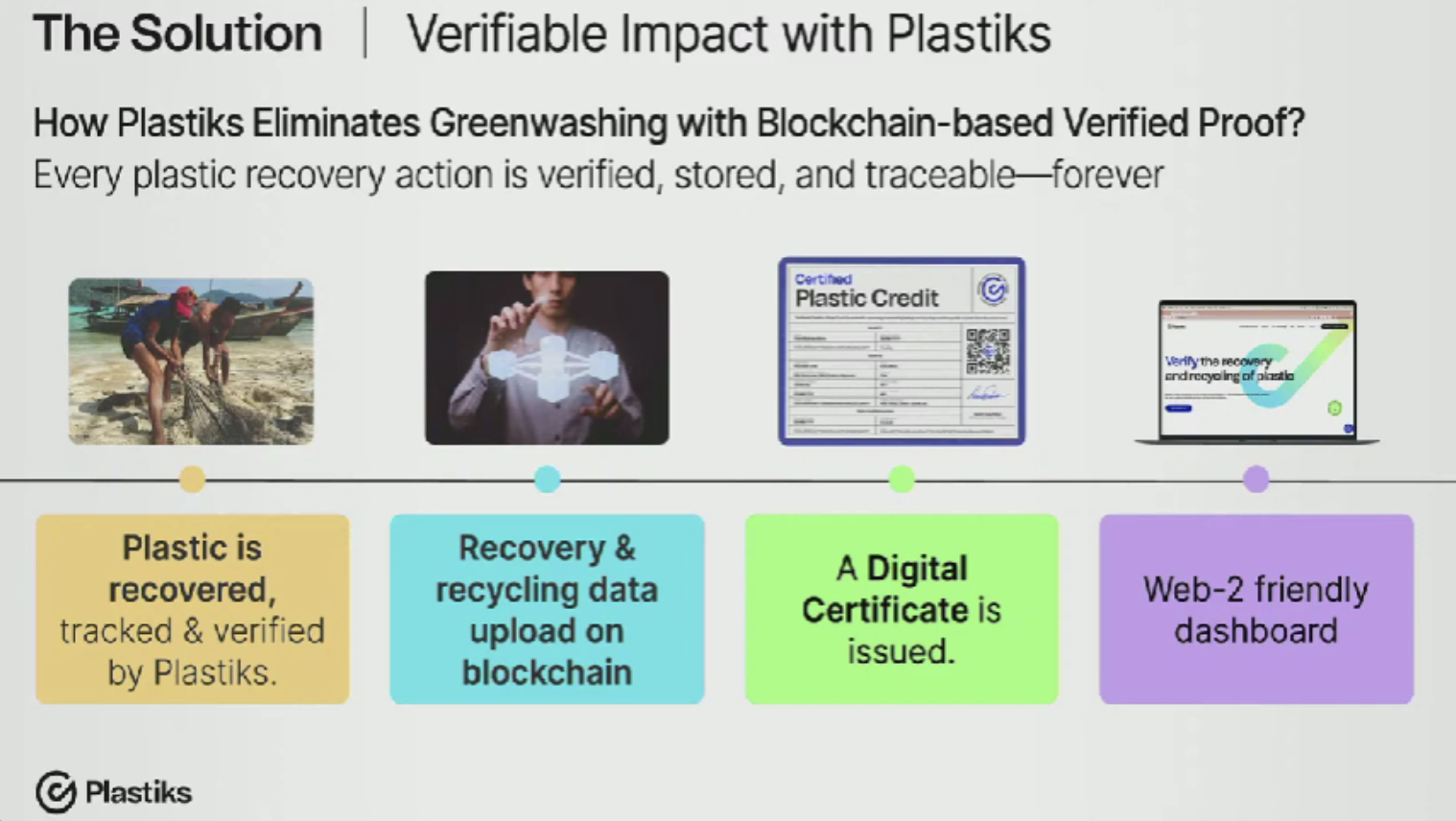
Moreover, blockchain technology is proving to be a powerful tool in promoting transparency and sustainability across global supply chains. The keynote session on this emphasized blockchain’s role in combating greenwashing by ensuring the traceability and verification of waste recovery and recycling. A green tech company using blockchain to verify and trace plastic waste recovery and recycling, called Plastiks, creates a new economic model for waste management companies by enabling them to earn revenue through verified environmental data, recorded immutably on the blockchain. This allows companies like Danone to trace recycled plastic (rPET) used in their packaging and demonstrate their environmental impact using NFT-based certificates. These blockchain-verified credits help support local waste management operations in developing regions by creating financial incentives tied to real-world recycling outcomes.
 The panel discussion extended these ideas into broader supply chain challenges, highlighting the fragmented and opaque nature of global logistics. Experts from Fraunhofer IML, IOTA Foundation, and Zengate Global shared use cases showing how blockchain can streamline compliance, data sharing, and traceability—especially under new regulations like the European Union Deforestation Regulation (EUDR). Key obstacles remain, such as data privacy concerns, technical complexity, and the digital divide among farmers and cooperatives. However, by engaging local stakeholders early and focusing on real user needs, blockchain can support more sustainable practices in sectors like agriculture and shipping. Ultimately, the technology’s real value lies not just in transparency, but in enabling trust, accountability, and equitable participation across the supply chain.
- Innovative Campaigns and Environmental Awareness
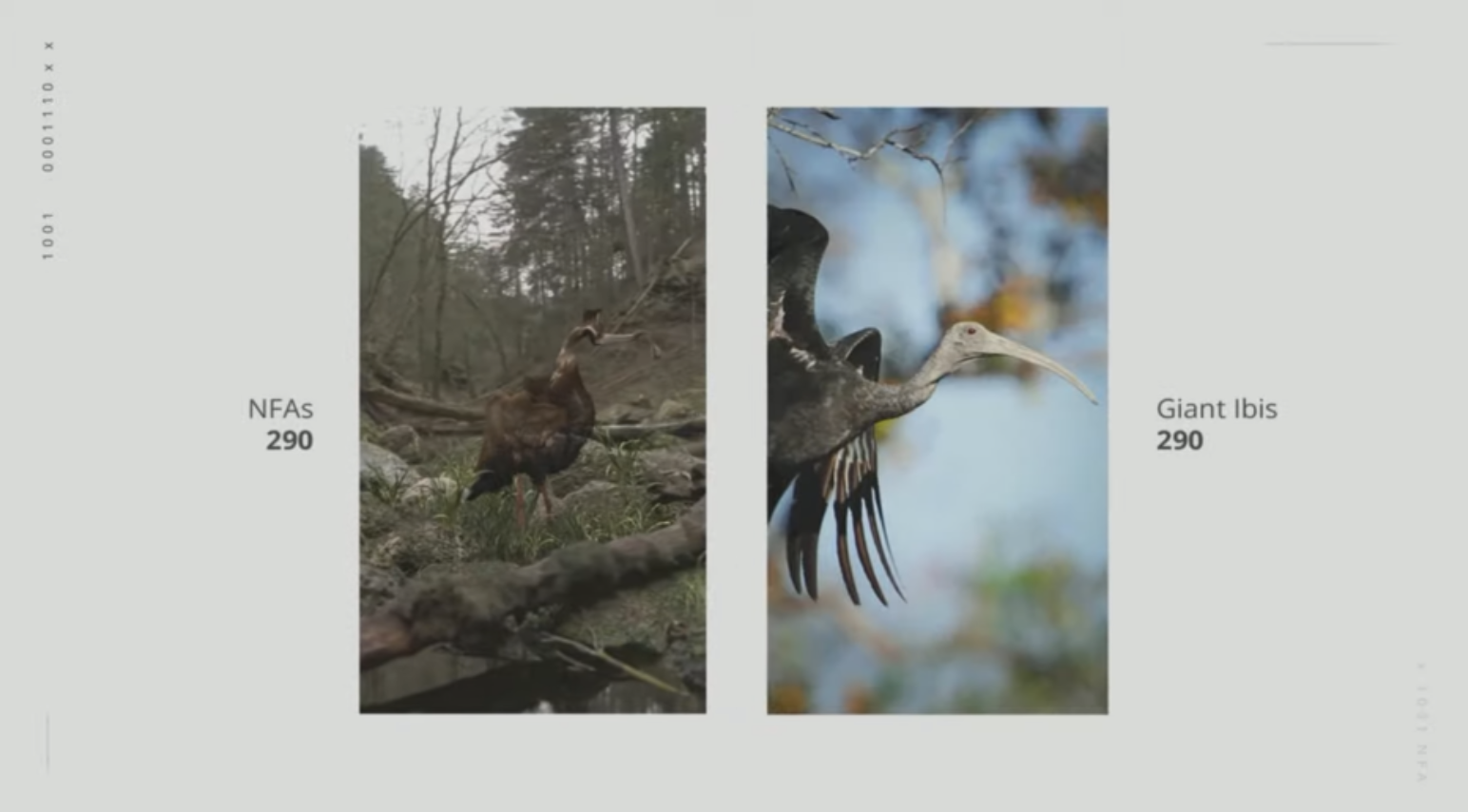
WWF Germany has pioneered creative digital approaches to conservation, leveraging emerging technologies like blockchain, NFTs, and the metaverse to engage broader audiences and drive tangible environmental impact. Notably, their “Non-Fungible Animals” initiative used eco-friendly blockchain technology to sell NFT artworks representing endangered species, raising $400,000 for conservation while fostering a sense of ownership and participation among supporters. This approach not only increased transparency and traceability in donation use but also positioned WWF as a leader in innovative environmental campaigns. Similarly, the #OCEANDETOX project harnessed the immersive power of the metaverse, allowing users to purchase NFTs representing ocean trash, with each purchase funding the removal of real waste—demonstrating how virtual engagement can translate into real-world sustainability action. In 2023, WWF’s Climate Realism campaign used AI to reimagine famous landscape paintings under different climate scenarios, transforming scientific data into emotionally compelling digital art. By blending creativity, technology, and environmental stewardship, WWF Germany continues to broaden its reach, inspire new forms of activism, and set a benchmark for tech-enabled conservation.
Discussions during the panel highlighted the challenges and strategies in deploying such technologies within the sustainability sector. Panelists emphasized that while blockchain offers transparency and programmable logic for purpose-driven funding, its adoption is often hindered by organizational risk aversion, high development costs, and public misunderstanding of the technology. Successful campaigns, such as WWF’s, relied on executive trust, bold top-down initiatives, and a focus on communicating the solution’s value rather than the underlying technology. Experts agreed that for mass adoption, blockchain should serve as a backend enabler, with user experiences centered on tangible benefits and outcomes—such as improved microfinance access for farmers or more effective government services—rather than on the technology itself. This shift in narrative and focus on integrated, open-source solutions is seen as key to scaling digital innovation for sustainability.
- Greener Industries and Sustainability
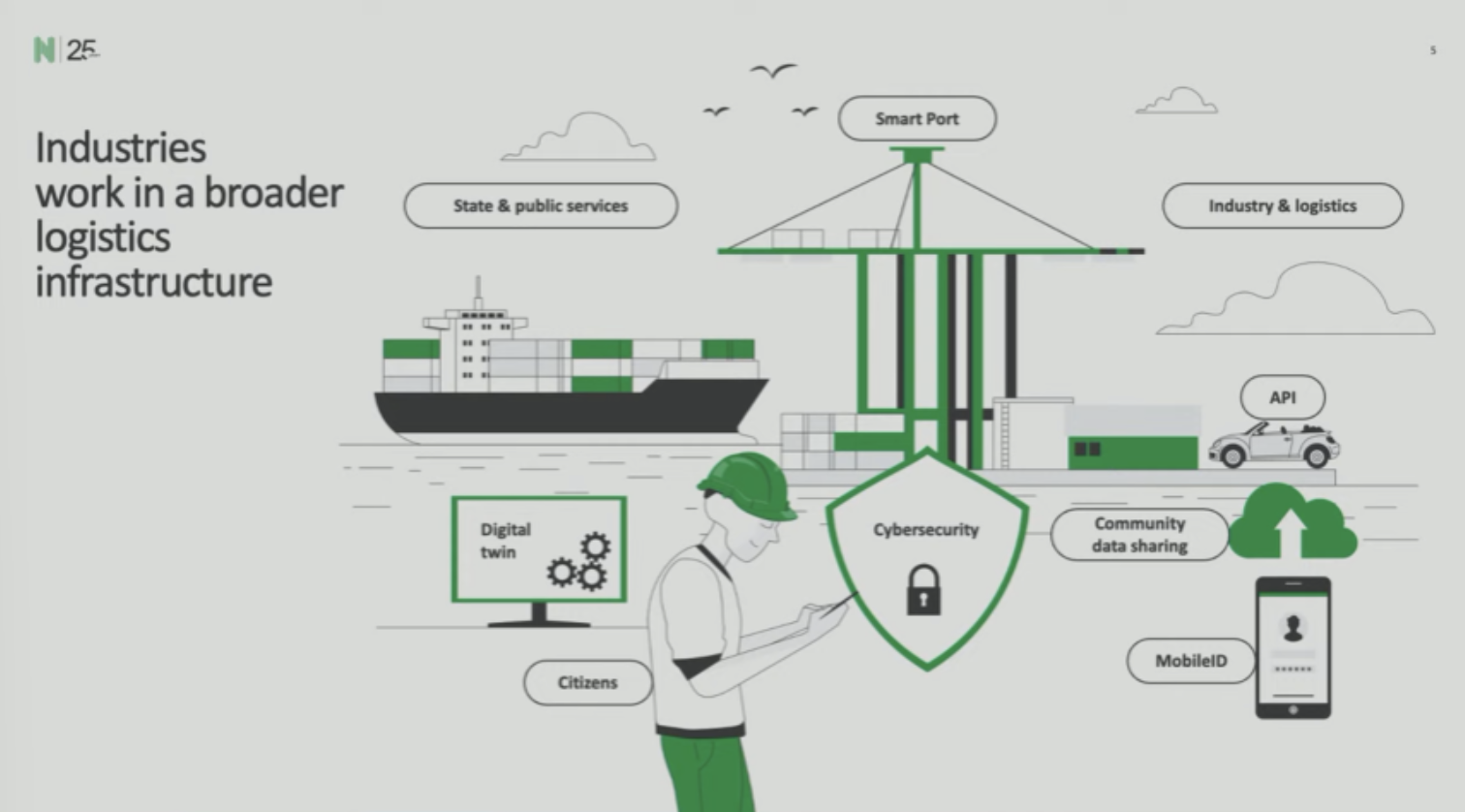
The “Greener Industries” and “Web3 Incentives for Change” sessions at SmartFutures Day 2 showcased how blockchain, IoT, and digital management tools are redefining sustainability across sectors. The keynote session featured Nortal’s work on the Smart Port of Tallinn, which leverages automation, pre-gate data capture, and real-time integrations with customs and security systems to slash emissions, reduce congestion, and improve operational efficiency. The panel extended the discussion to greener mining, green steel, and battery recycling, emphasizing how digital material passports and blockchain-enabled traceability can make emissions and lifecycle data transparent—driving informed decision-making and accountability across the supply chain.
 In parallel, another session on Web3 incentives illustrated how token-based models can motivate sustainable behavior on a city scale. The session also presented real-world successes like the Emmen municipality’s switch from paper vouchers to programmable energy subsidies via blockchain, which dramatically increased citizen participation. The MultiKnip app and projects involving tokens for circular economy efforts (like bicycle donations for refugees) demonstrated how blockchain can stimulate local economies, enhance inclusivity, and reduce administrative burdens while maintaining privacy. These examples highlight programmable money’s power to create behavioral change by rewarding citizens with purpose-bound tokens for sustainable actions.
Both sessions emphasized the importance of transparency, automation, and trust in enabling greener transitions. From digital product passports in electric vehicle battery recycling to the gamification of waste management through NFTs and token economies, these technologies are laying the foundation for a new model of industrial and civic engagement. The key takeaway across both discussions was that digital tools must align with real-world use cases and be designed with users at the center to scale effectively and drive systemic sustainability.
- AI and Blockchain Integration
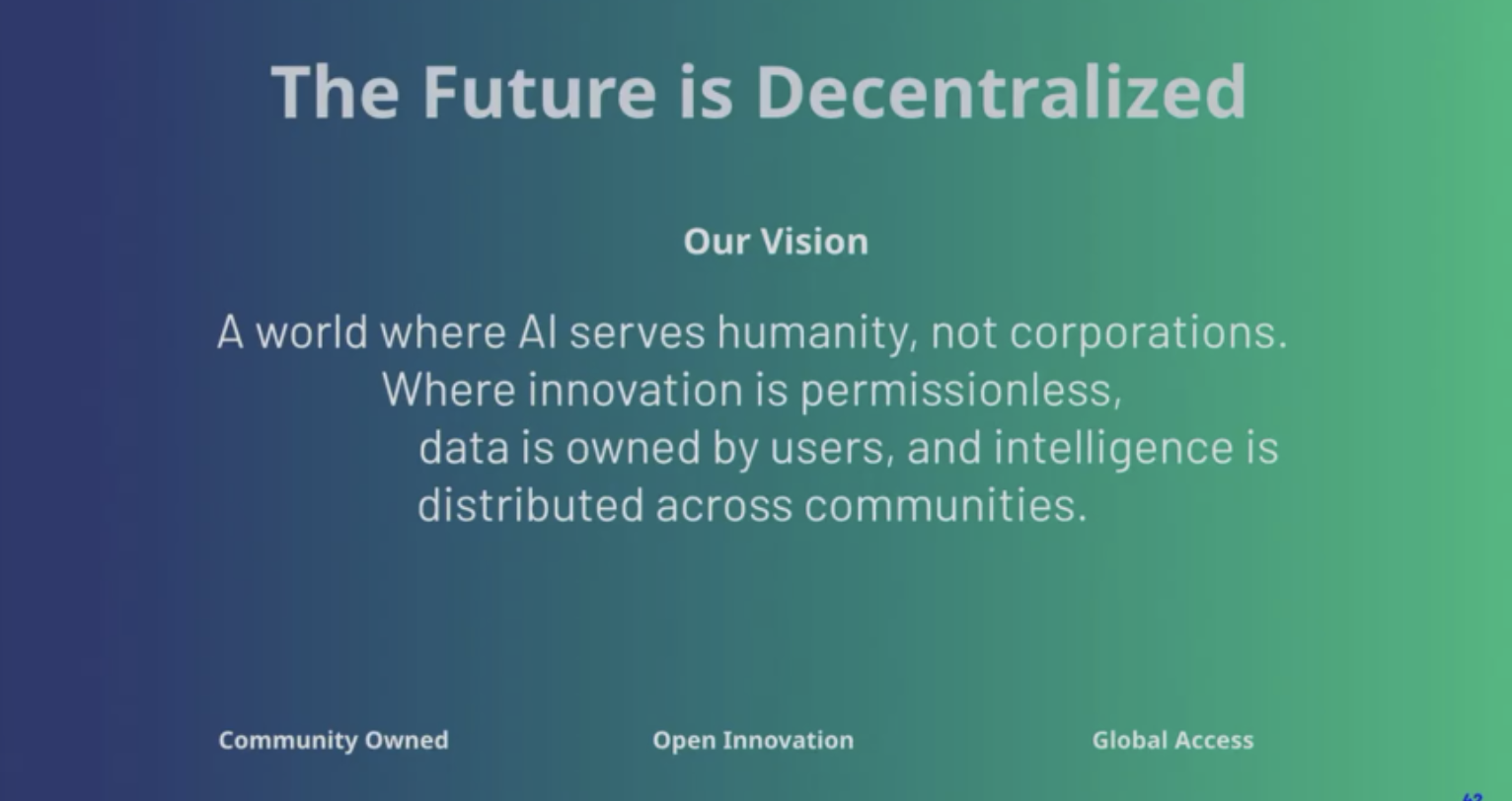
The session “Creative Horizons with AI and Blockchain” at SmartFutures Day 1 spotlighted the rapid evolution and transformative potential of AI and blockchain technologies. This keynote section emphasized how AI has moved from static tools like ChatGPT to the next frontier of autonomous AI agents capable of reasoning, executing multi-step tasks, and even transacting on behalf of users. She introduced the concept of an “agent economy,” where AI agents act as digital representatives, collaborating and negotiating autonomously, powered by personal and real-world data. The integration of blockchain technology further enhances these agents by providing transparency, auditability, and decentralized control, reducing dependency on centralized corporate platforms and enabling agents to operate as independent economic actors.
 The panel discussion later expanded on these themes, exploring the intersection of AI, blockchain, and regulation. Panelists highlighted the importance of interoperability, such as the Agent-to-Agent (A2A) protocol, for building a functional agent-driven digital economy. While blockchain’s transparency is seen as vital for trust and accountability, the group also noted the challenges posed by premature or overly strict regulation, which can stifle innovation. Instead, they advocated for responsible development, strong internal standards, and open governance frameworks. Ultimately, the session called for a future where AI and blockchain are developed as shared, communal resources—prioritizing ethical considerations and societal benefit over proprietary control.
- Education and Learning
The session “Blockchain for Skills, Learning & Digital Credentials” at SmartFutures explored how blockchain technology is transforming the recognition and verification of skills in education and professional development. This keynote section emphasized that blockchain-based badges and learning platforms can make credentials more portable, verifiable, and reflective of real-world contributions. The speaker argued for moving beyond traditional, institution-based credentials to dynamic systems that value demonstrated skills and collaborative achievements. By focusing on how credentials are used, earned, and valued, blockchain has the potential to connect local innovation with global opportunities, making skill recognition more meaningful and accessible.
During the panel discussion, experts from Andamio, MyCelia, UNDP, and Relevantive highlighted both the opportunities and challenges of implementing blockchain in credentialing. The panel stressed the importance of open educational badges, clear use cases, and integration with digital wallets to enhance the value and accessibility of digital credentials. They also addressed the need for interoperability and standardization to overcome the current fragmentation in credentialing systems worldwide. Ultimately, the panel agreed that blockchain can bridge gaps in traditional systems, empower individuals, and create new forms of value by recognizing and incentivizing lifelong learning and real-world skills.
Conclusion: DevCAFE in Blockchain for Development
In addition, UNDP emphasized the importance of digital transformation and governance in driving sustainable development. The focus is on adopting more digital approaches both internally and externally to strengthen operational efficiency and enhance development outcomes. By leveraging blockchain, UNDP aims to enhance the efficiency and sustainability of governance models, ensuring that they are both impactful and transparent. The UNDP session also highlighted the challenges in health and governance systems, particularly in conflict zones and regions facing the devastating impacts of climate change.
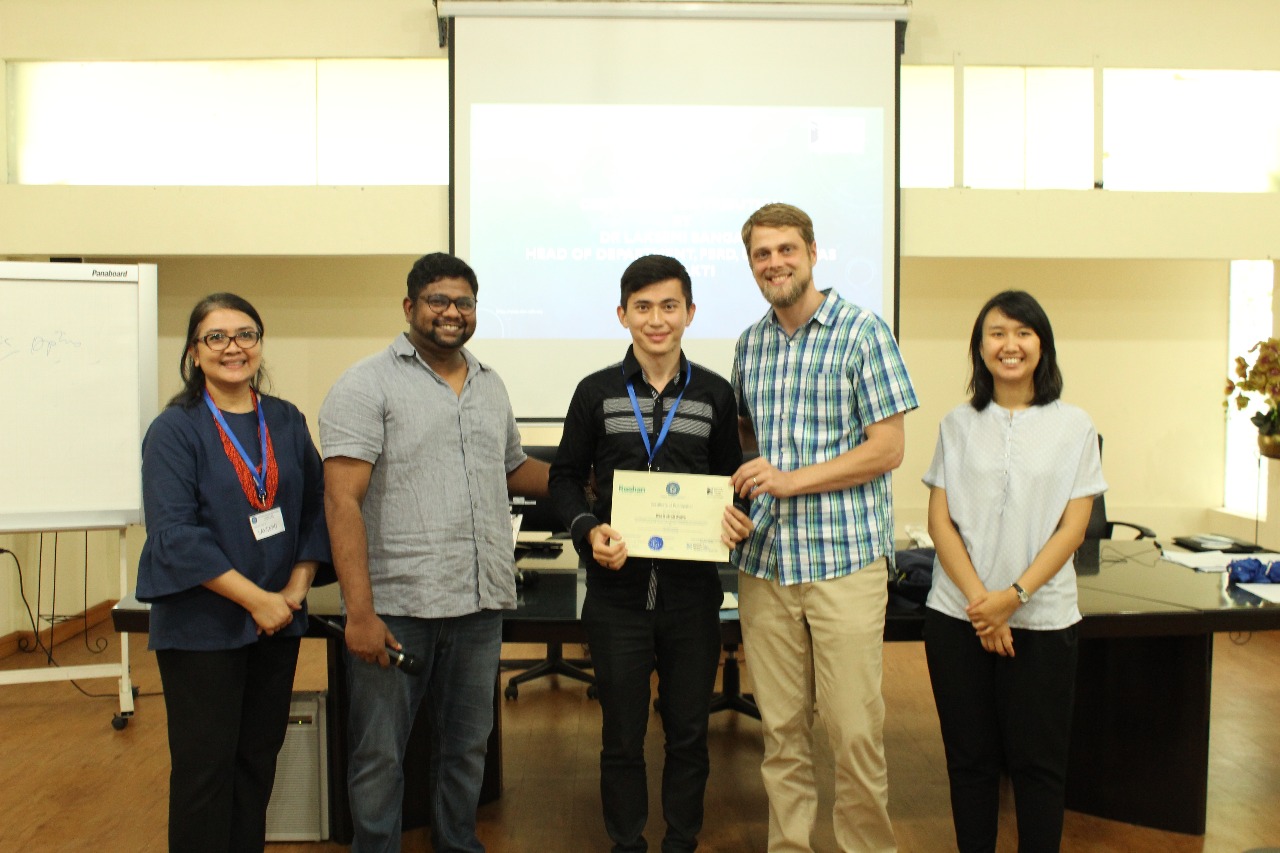
The Development CAFE shares a similar vision with UNDP, recognizing the transformative potential of digital transformation and blockchain technology in addressing critical challenges in health and governance. As an expert in ICT4D with extensive experience in blockchain for development, the Development CAFE is inspired by UNDP’s efforts to leverage blockchain for enhancing transparency and accountability in development projects. The Development CAFE is particularly interested in exploring initiatives in blockchain technology for development. For instance, the Development CAFE has been involved in projects like “I AM,” a collaborative initiative between Blockchain4Refugees and Roshan Learning Center. This project provided research methodology training to refugees and displaced persons, empowering them with the skills to analyze data and produce evidence-based solutions to their challenges. By leveraging blockchain technology, Project “I AM” aimed to create a sustainable and scalable model for empowering vulnerable populations and promoting active participation in shaping their futures. This effort is a crucial step towards achieving greater inclusivity and empowerment for refugees and displaced persons, contributing to a more equitable and just society.
Reflecting on the SmartFutures event, the Development CAFE sees significant potential in blockchain technology to drive transparency, efficiency, and positive change. The insights gained have provided a clear direction for integrating blockchain into the organization’s projects, focusing on creating impactful and sustainable outcomes. The Development CAFE is excited about the future of blockchain and its applications in sustainable development, eager to explore how these technologies can be leveraged to address global challenges. The event has been a valuable learning experience, providing a platform for dialogue and innovation that will continue to shape the Development CAFE’s work in the coming years. For more information on our work in blockchain for development or to explore collaboration opportunities, please reach out to us at [email protected].